You have built the product. You know the problem it solves. You know exactly who needs it.
Then someone asks: “Have you sorted your regulatory compliance?”
And just like that, the excitement fades.
Africa is not one market. It is over 50 countries, each with its own central bank, licensing requirements, and rules around everything from mobile money to crypto to digital lending. If you are a founder, investor, or legal team trying to figure out where to start, this guide is for you.
By the end, you will know which regulators matter in each key market, what licenses are required, and the right questions to ask before you spend a dollar on applications.
Why Africa’s Fintech Regulatory Framework Feels Hard to Navigate
The honest reason the fintech regulatory environment in Africa feels overwhelming is that it genuinely is, at first.
Some countries have mature, well-documented frameworks. Others are still writing their rules. Some regulators welcome fintech innovation through a regulatory sandbox. Others remain cautious, especially around crypto and digital credit.
The result is a patchwork. A payment service provider license in Ghana is structured differently from one in Nigeria. The digital credit rules Kenya introduced in 2022 do not exist in the same way in Rwanda. Founders who try to copy and paste their compliance approach across borders often run into problems that could have been avoided with clearer information upfront.
The same is true in any digital industry. Just as SaaS companies need a clear content and growth strategy before scaling, fintech companies need a clear regulatory strategy before expanding. Once you understand each market on its own terms, the path forward becomes much clearer.
What Fintech Regulatory Compliance Means in Africa
Before the country breaks down, it helps to anchor on what we are actually talking about.
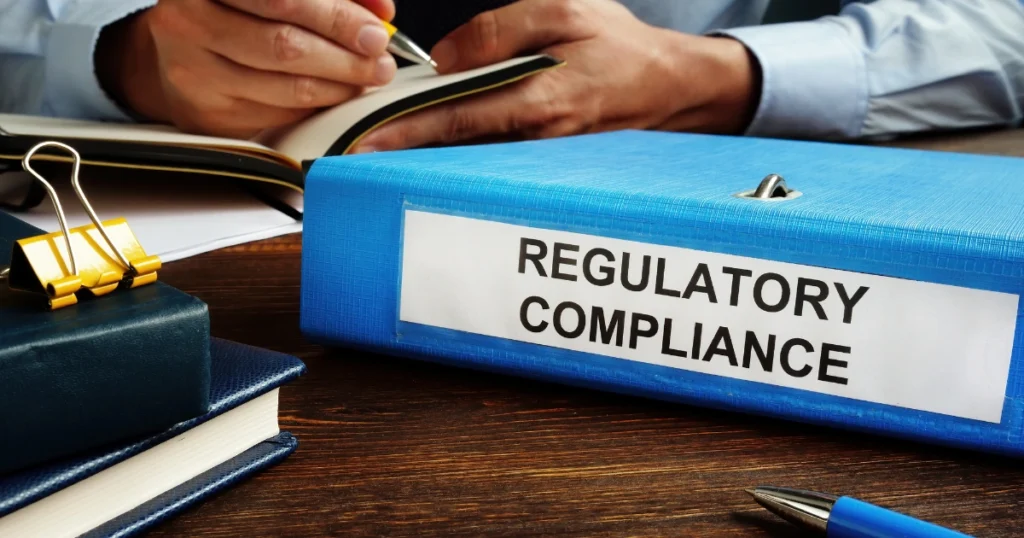
Fintech regulatory compliance in Africa means obtaining the correct licenses, meeting capital requirements, incorporating locally, and following KYC (Know Your Customer) and AML (anti-money laundering) obligations as required by each country’s financial regulator before you can legally offer any financial service to customers.
This applies whether you run a payment platform, a digital lending product, an e-money wallet, or offer virtual and physical card solutions for online transactions. Your product type determines your license category, which determines everything from capital thresholds to data localization requirements.
Common license types across the continent include the Electronic Money Issuer (EMI), Payment Service Provider (PSP), Mobile Money Operator (MMO), Digital Credit Provider (DCP), and Payment Service Bank (PSB). Each country has its own names, tiers, and thresholds.
Ghana Fintech Licensing Requirements: A Structured Entry Point Into West Africa
The Bank of Ghana (BoG) is the primary regulator under the Payment Systems and Services Act, 2019. Most fintechs need either an EMI or PSP license, available in Standard or Enhanced tiers based on transaction volumes and service scope.
Requirements include a locally registered entity, at least one local director, minimum paid-up capital that varies by license tier, and data storage compliance. Ghana’s fintech regulatory process is relatively structured, making it a common starting point for fintechs expanding into West Africa.
On crypto, Ghana has no formal framework yet. The sector is monitored but neither approved nor banned. If your product involves crypto, take proper legal advice before assuming you can operate freely. KYC and AML enforcement runs through both the Bank of Ghana and the Financial Intelligence Centre.
Nigeria Fintech Regulation: Strict Capital Rules and No Room for Shortcuts

The Central Bank of Nigeria (CBN) governs Nigeria’s fintech space. Key licenses include the Mobile Money Operator (MMO) license, the Payment Service Bank (PSB) license with significant capital requirements, and a Switching and Processing license for infrastructure-level operators. The CBN has consistently raised and enforced capital thresholds as part of building a more resilient financial system.
Local incorporation is mandatory. No foreign branch arrangements are permitted. Crypto is officially banned within regulated Nigerian financial institutions. KYC and AML compliance is non-negotiable for every licensed payment operator, with enforcement active through both the EFCC and the NFIU.
Nigeria rewards founders who treat compliance as a foundation, not an afterthought.
Kenya Digital Credit Provider Licensing: Why the Rules Changed and What It Means
The Central Bank of Kenya (CBK) operates under the National Payment System Act, 2011. PSP licenses cover payment platforms. The rule that changed the digital lending landscape was the Central Bank of Kenya Digital Credit Providers Regulations, gazetted in March 2022, making a DCP license mandatory for any app offering digital loans to Kenyan users.
This came directly after a crackdown on unlicensed digital lenders exploiting borrowers with no oversight. Foreign investment requires separate CBK approval. A regulatory sandbox is available for early-stage companies testing models that do not fit existing license categories. KYC and AML obligations fall under the Proceeds of Crime and Anti-Money Laundering Act.
If you are building a lending product for Kenya, the DCP license is not optional.
Rwanda and South Africa Fintech Regulation: Two Very Different Models

Rwanda
The National Bank of Rwanda (BNR) operates under Law No. 048/2010 on Electronic Transactions. PSP licenses come with fintech-specific categories, and e-money and credit scoring licenses are issued separately. Rwanda permits crypto through its regulatory sandbox, making it one of the very few African countries with a structured legal pathway for digital asset businesses. This also makes it an interesting market for fintechs handling cross-border payment flows across Africa.
South Africa
South Africa has the most layered fintech regulatory structure on the continent. Oversight is shared between the South African Reserve Bank (SARB) and the Financial Sector Conduct Authority (FSCA). The FSCA officially declared crypto assets as financial products in October 2022, meaning any business providing crypto-related financial services now requires a formal license. The FAIS Act may also apply depending on your product. Budget your time and legal resources accordingly.
Frequently Asked Questions About Fintech Regulation in Africa
Do I need a separate license for every African country I operate in?
Yes. There is no single continental fintech license. Each country has its own regulator and its own process, even within communities like ECOWAS or the EAC. You comply separately in every market you serve.
What is a regulatory sandbox, and should my startup apply for one?
A regulatory sandbox lets fintechs test new products under relaxed requirements for a fixed period. Rwanda and Kenya both offer one. It is worth considering if your product does not clearly fit an existing license category.
What do KYC and AML mean in practice for my fintech?
KYC means verifying user identities before onboarding. AML means monitoring transactions and reporting suspicious activity to the relevant authority, such as the NFIU in Nigeria or the FIC in Ghana. Both are mandatory across every major African fintech market.
Where does crypto regulation stand across Africa?
Nigeria bans it within regulated institutions. South Africa treats it as a regulated financial product. Rwanda permits it through a sandbox. Ghana remains largely unregulated. Always verify the current position in your target market before assuming anything.
Conclusion
Africa’s fintech regulatory landscape is complex but navigable when you take it one market at a time. According to AfricaNenda, over 350 million adults across Africa remain financially excluded, and that gap represents one of the biggest opportunities in digital finance today.
But trust in a regulated industry starts with getting compliance right from day one. Know your market. Get your license right. Then build
Ready to scale your fintech across Africa?
Join Paycape to get discovered, find partners, and stay compliant across West Africa
Join the Waitlist